HANNA HUR at Greene Naftali reviewed by Kat Herriman for W Magazine
Greene Naftali
Exhibition
Hanna Hur
Annunciation
8th Floor
“Where do images come from,” asks Hanna Hur—less a
question than a kind of summons. “Repetitive gesture becomes a petitioning of
the gods for the image to come near.” Her absorbing compositions hinge on the
constancy of the grid, transformed through prolonged encounter from static
matrix to embodied event. In an essay that accompanies Hur’s first solo
exhibition at Greene Naftali, Daniel Marcus details her approach to painting
“as ‘an act of submission’ . . . testing her capacity (and ours as well) to
bear the burden of its mystery.”
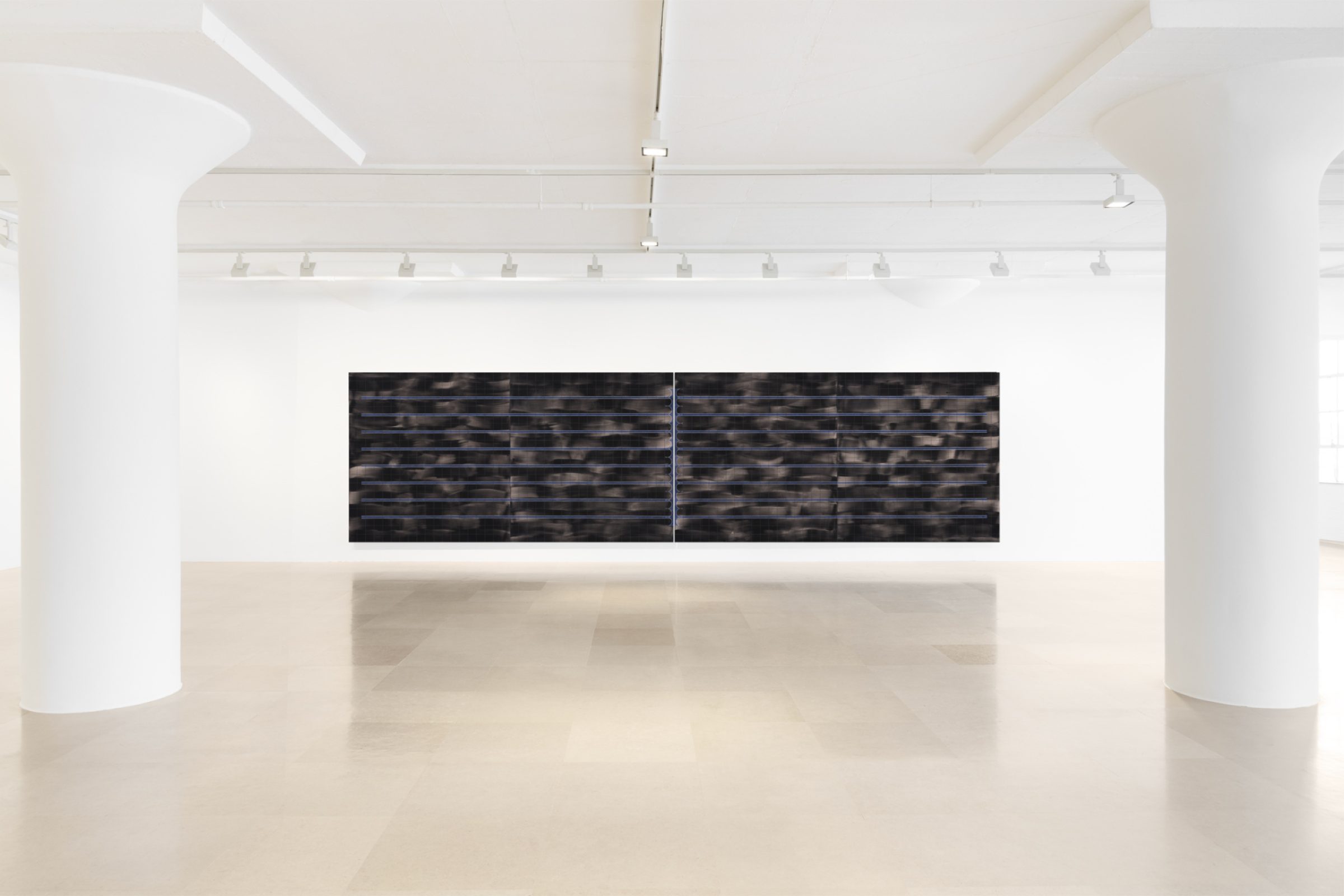
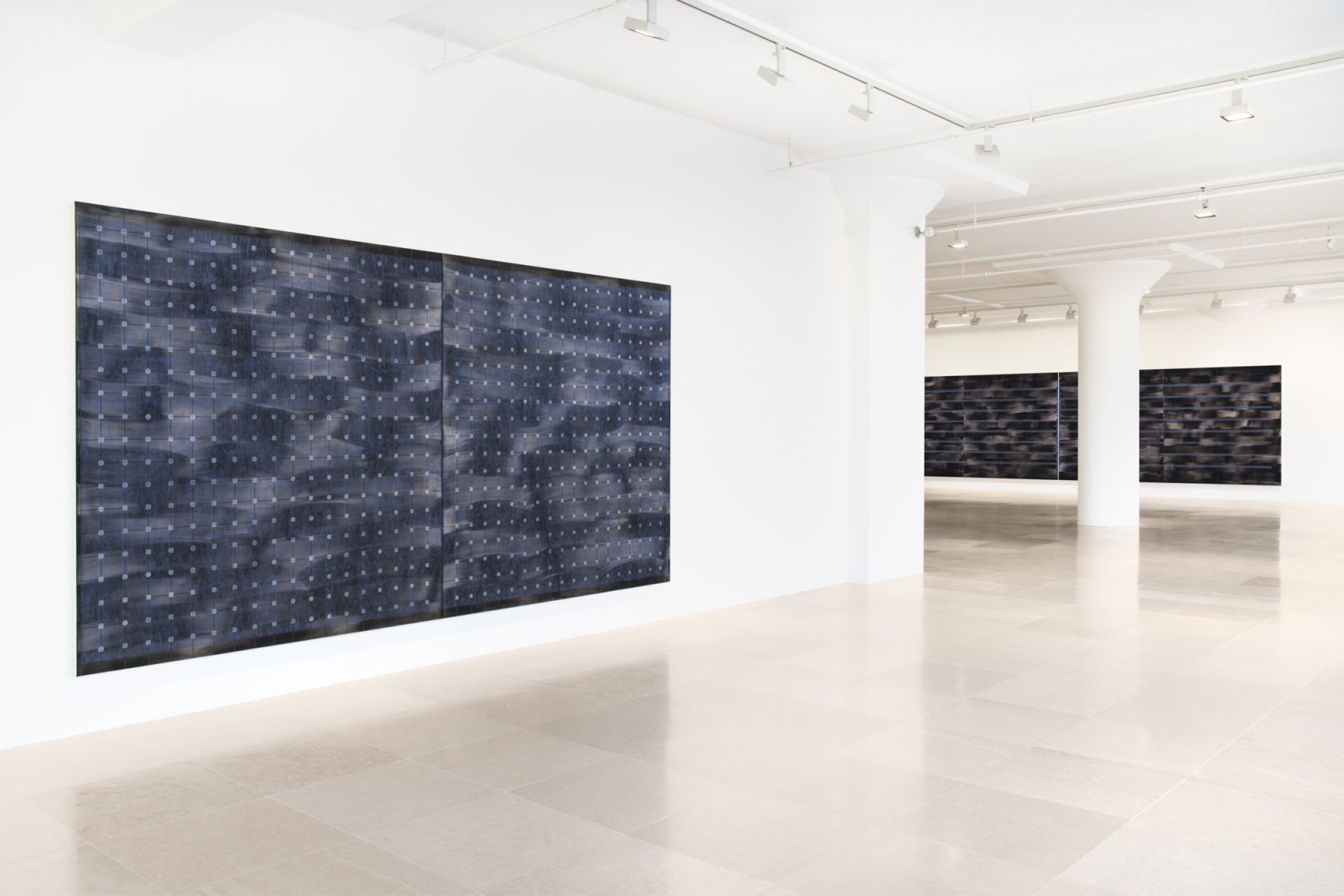
Hanna Hur, installation view, Annunciation, Greene Naftali, New York, 2026
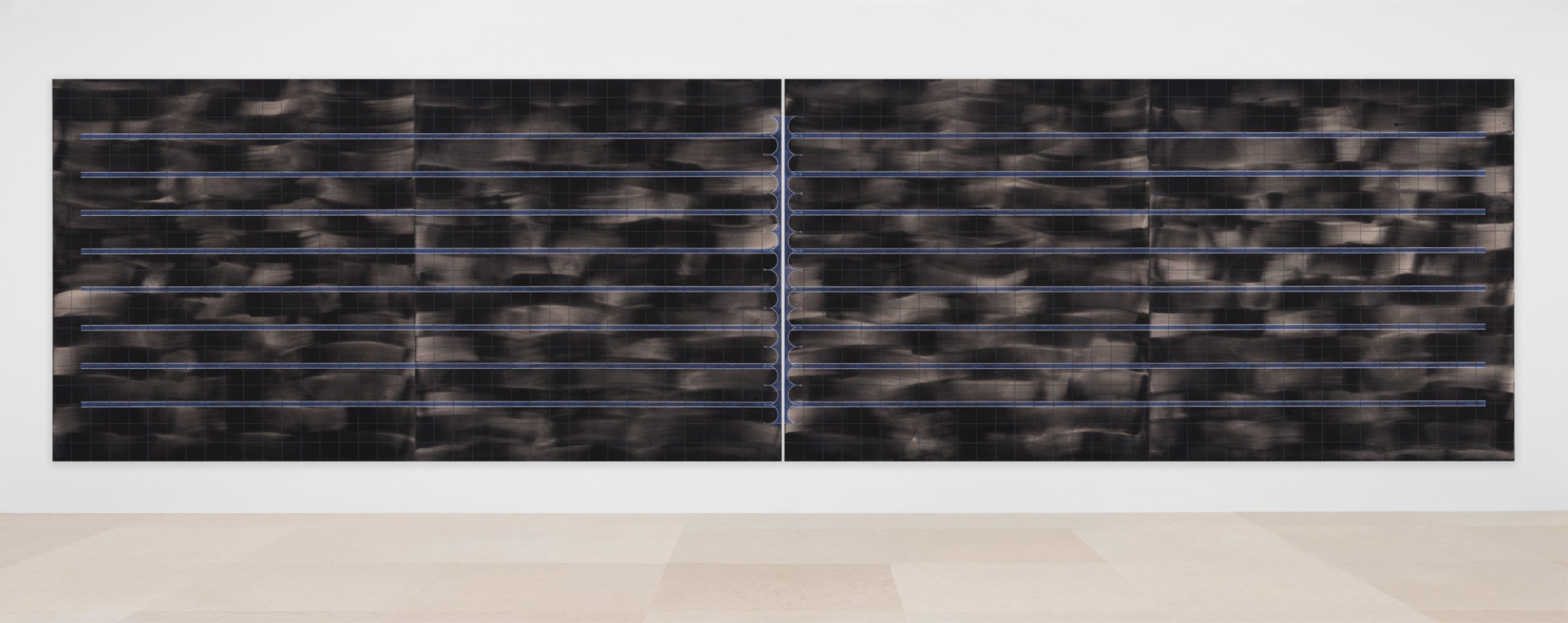
Hanna Hur
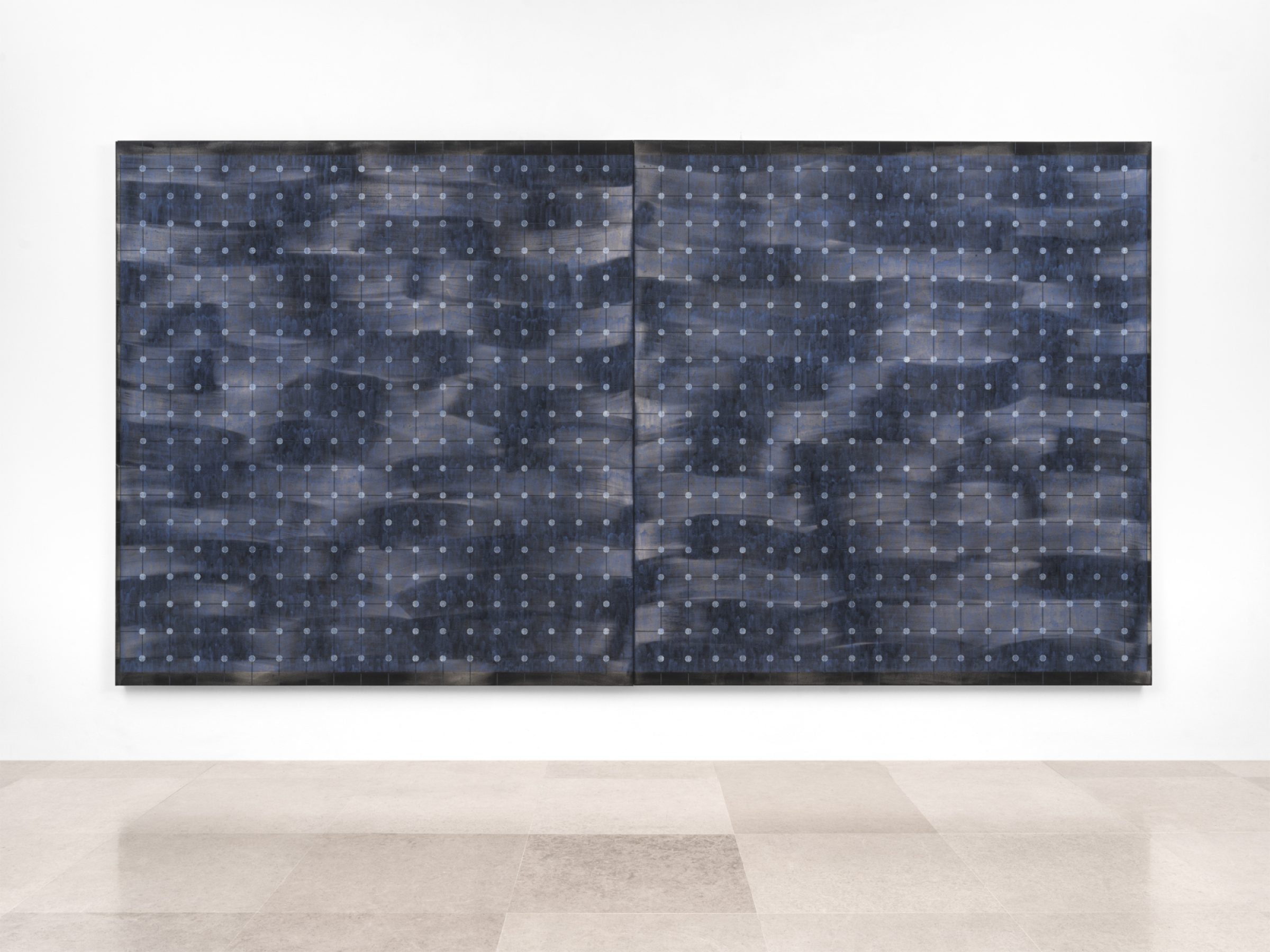
Angel xv, 2026
Acrylic, colored pencil and pigment on canvas
Overall: 80 x 304 1/2 inches (203 x 773 cm)
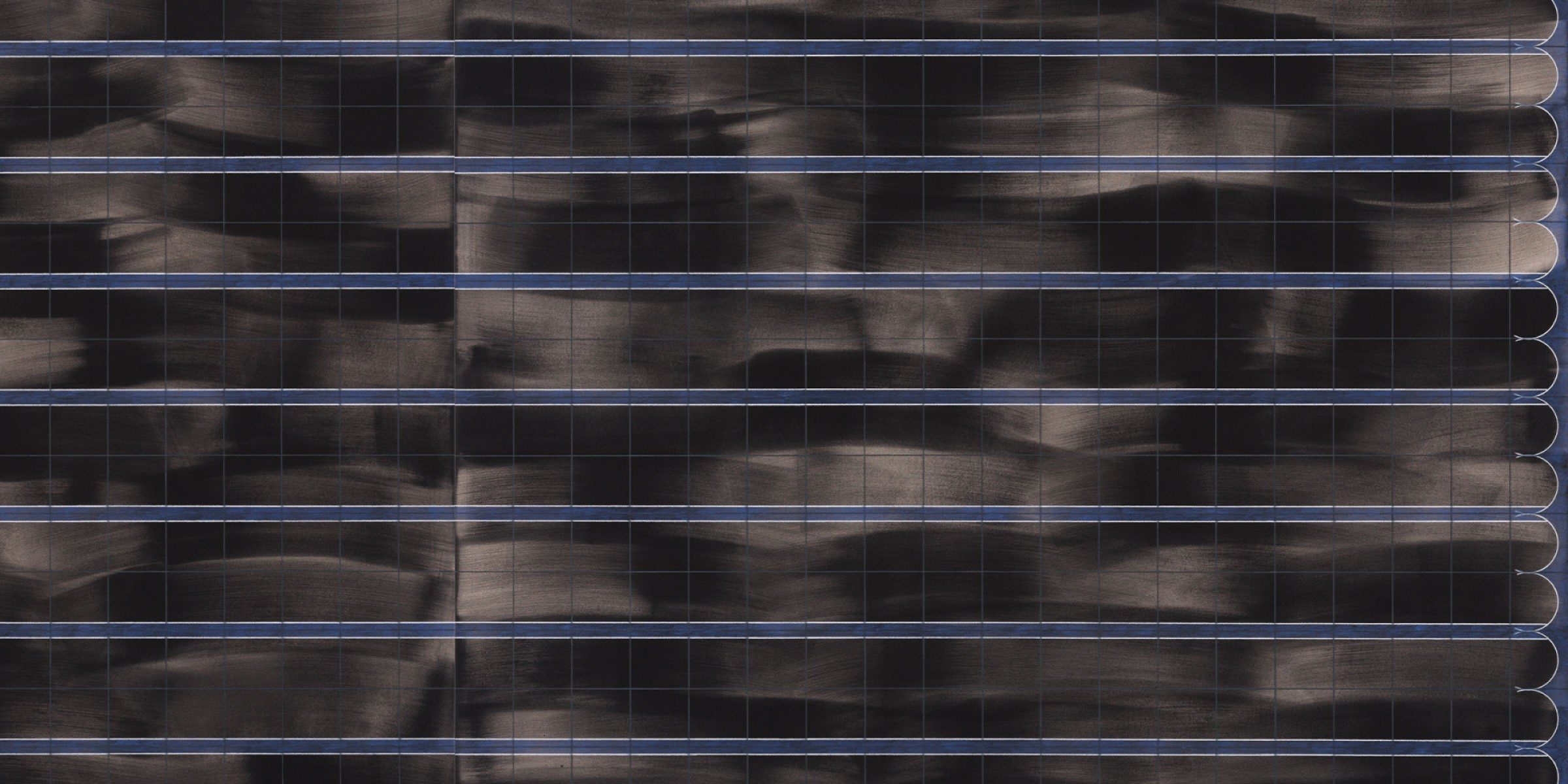
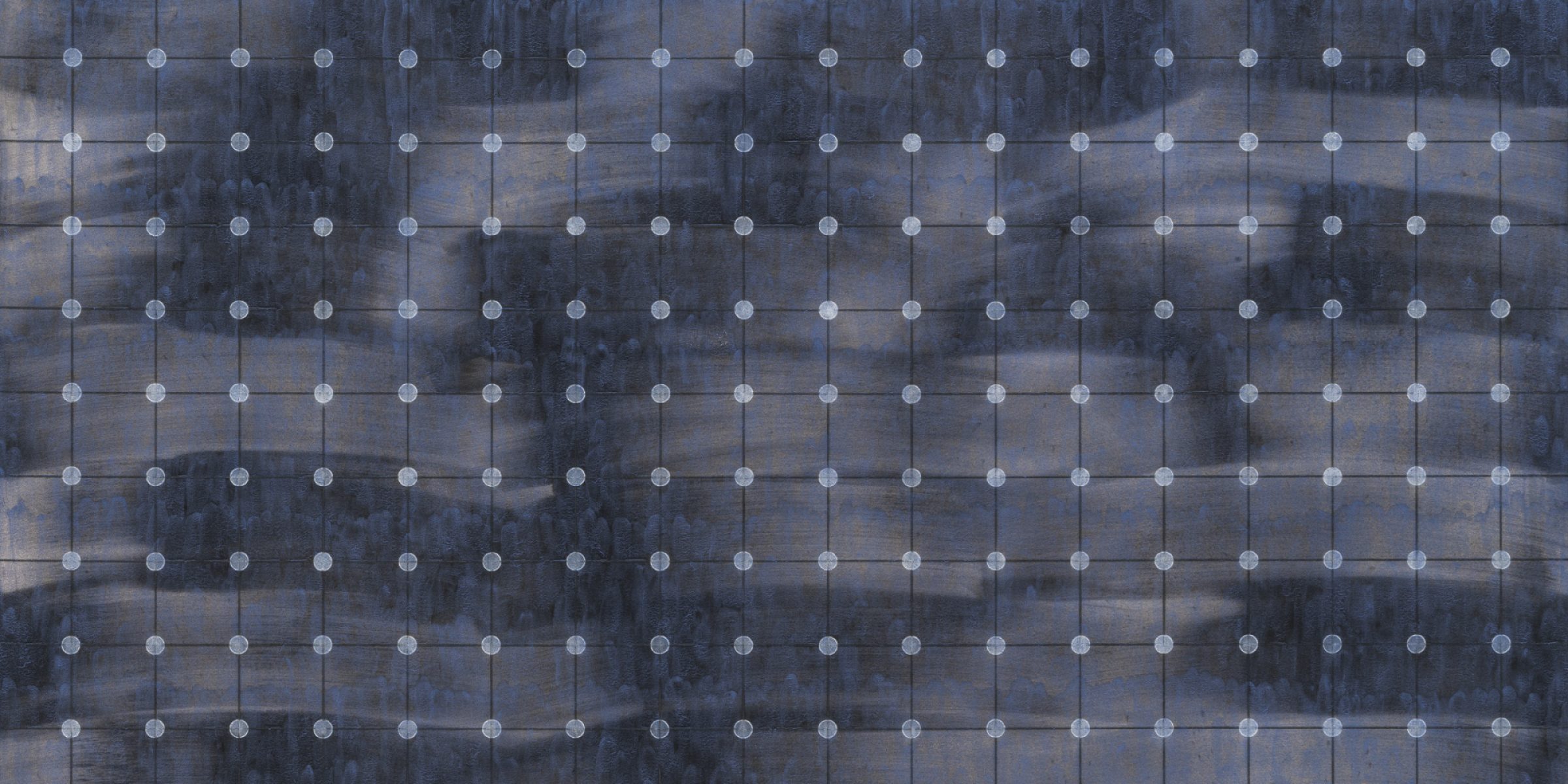
Hanna Hur, Angel xv, 2026 (detail)
Hanna Hur, installation view, Annunciation, Greene Naftali, New York, 2026
Hanna Hur
Suspension, 2026
Acrylic, colored pencil and pigment on canvas
Overall: 80 x 152 inches (203 x 386 cm)
Hanna Hur, Suspension, 2026 (detail)
Hanna Hur, installation view, Annunciation, Greene Naftali, New York, 2026
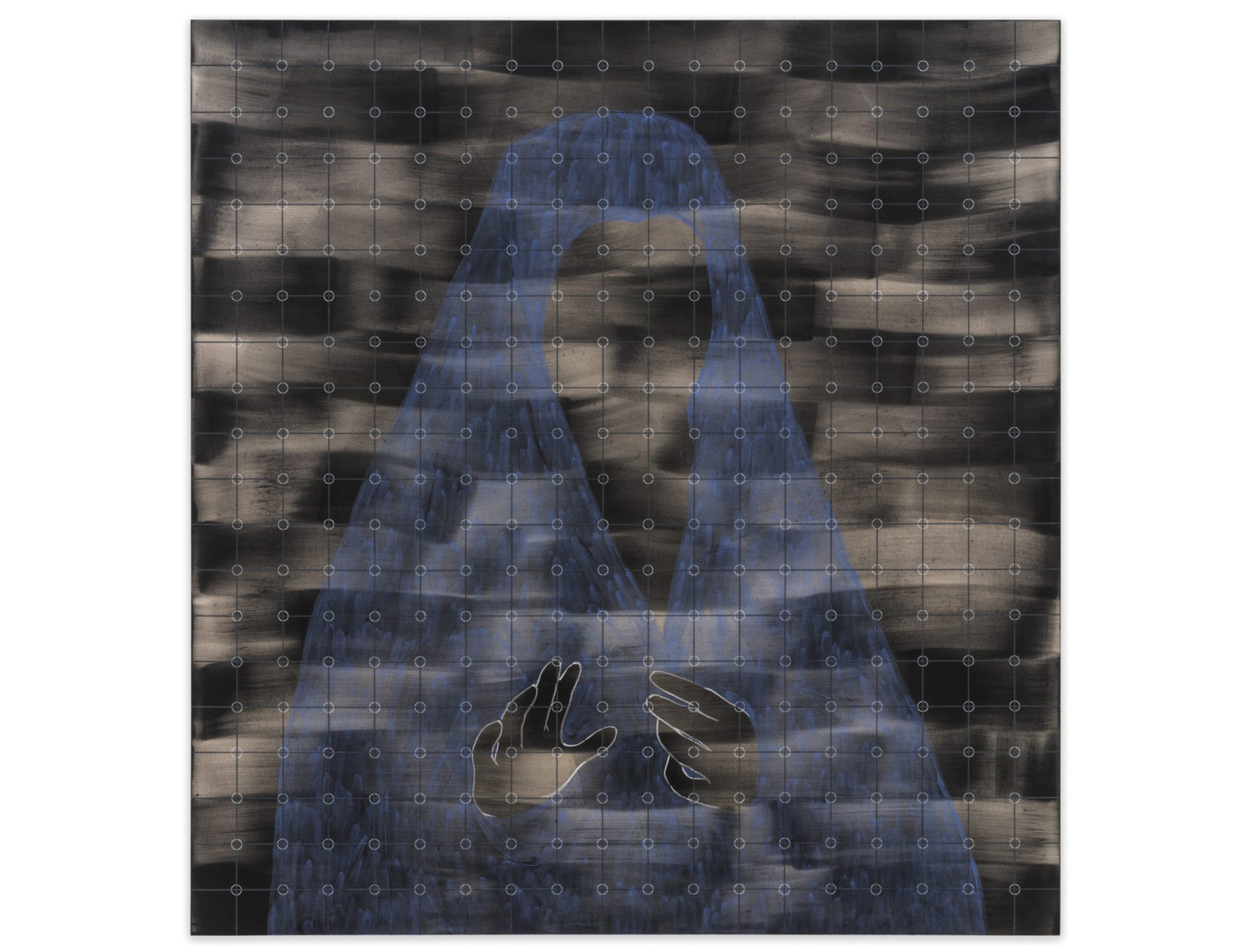
Hanna Hur
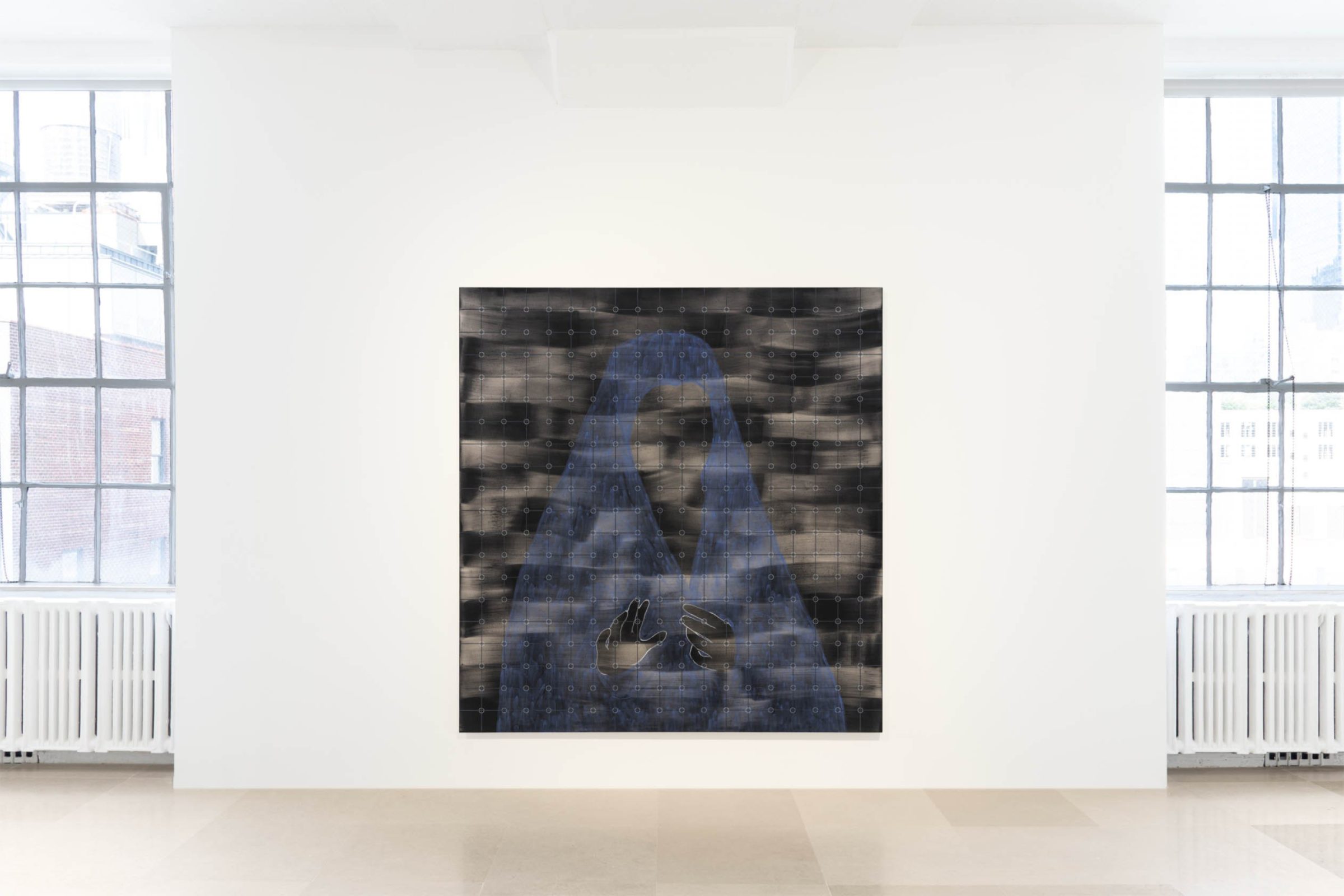
Auto Annunciate, 2026
Acrylic, colored pencil and pigment on canvas
80 x 76 inches (203 x 193 cm)
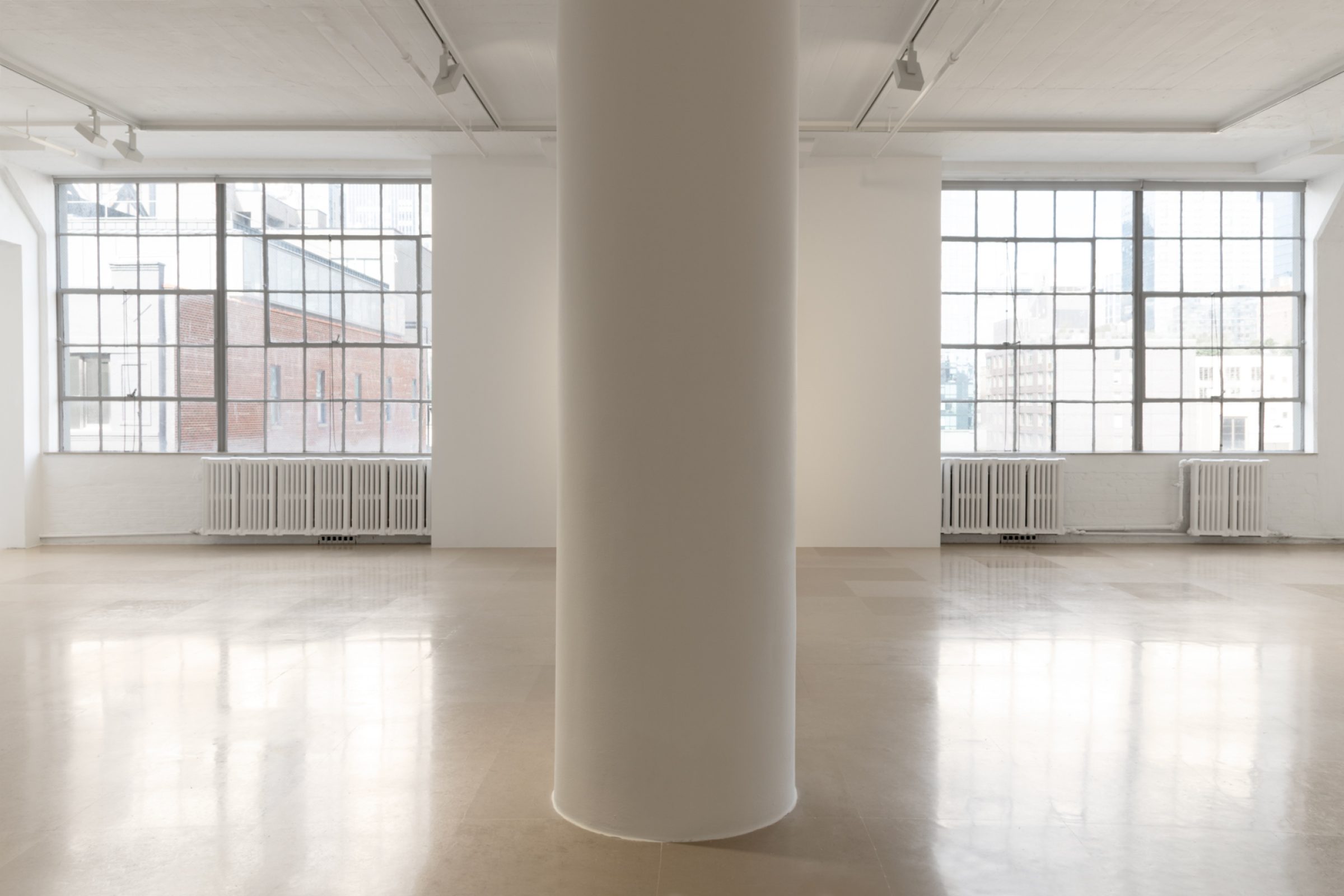
Hanna Hur, installation view, Annunciation, Greene Naftali, New York, 2026
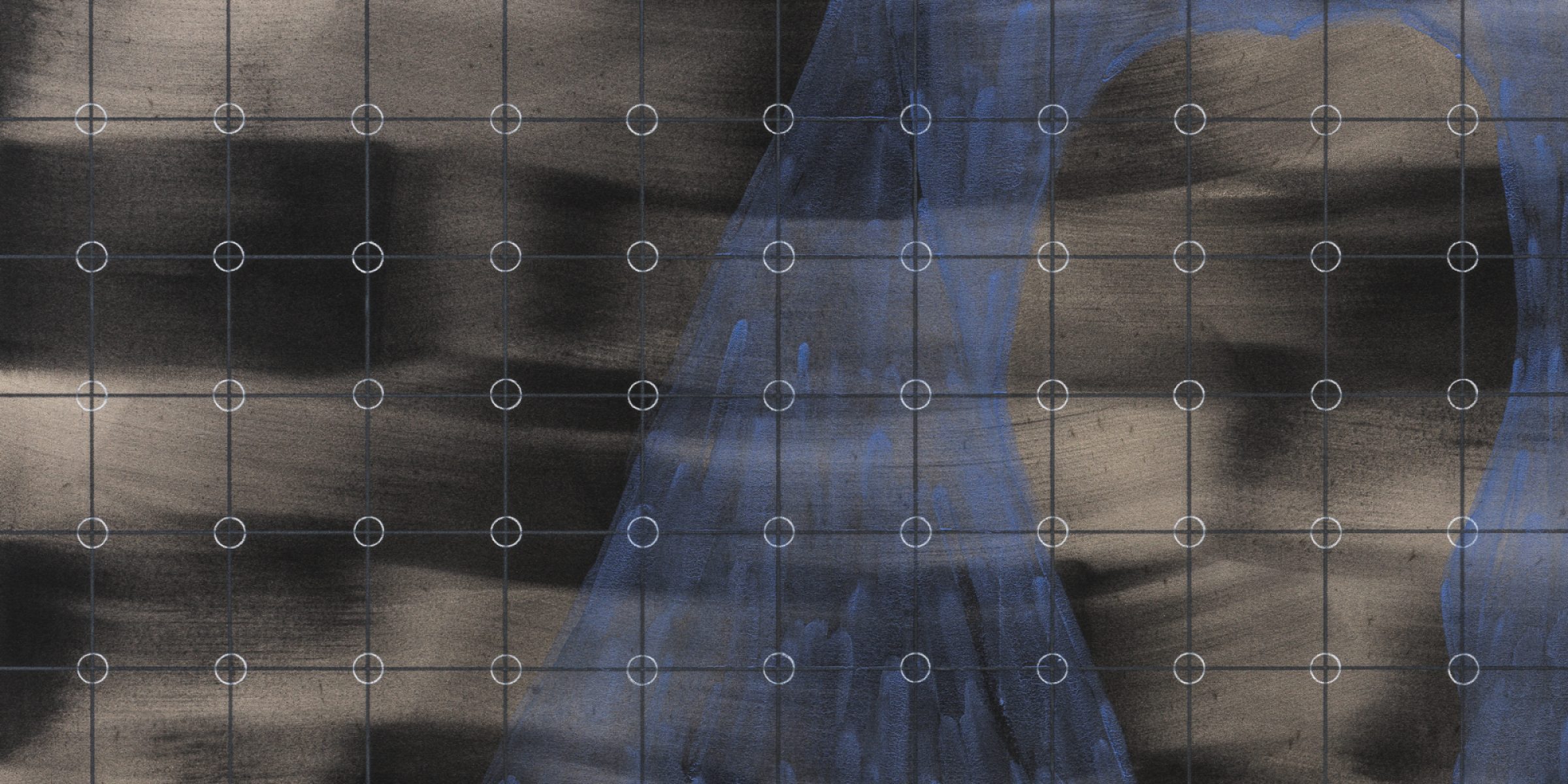
Hanna Hur, Auto Annunciate, 2026
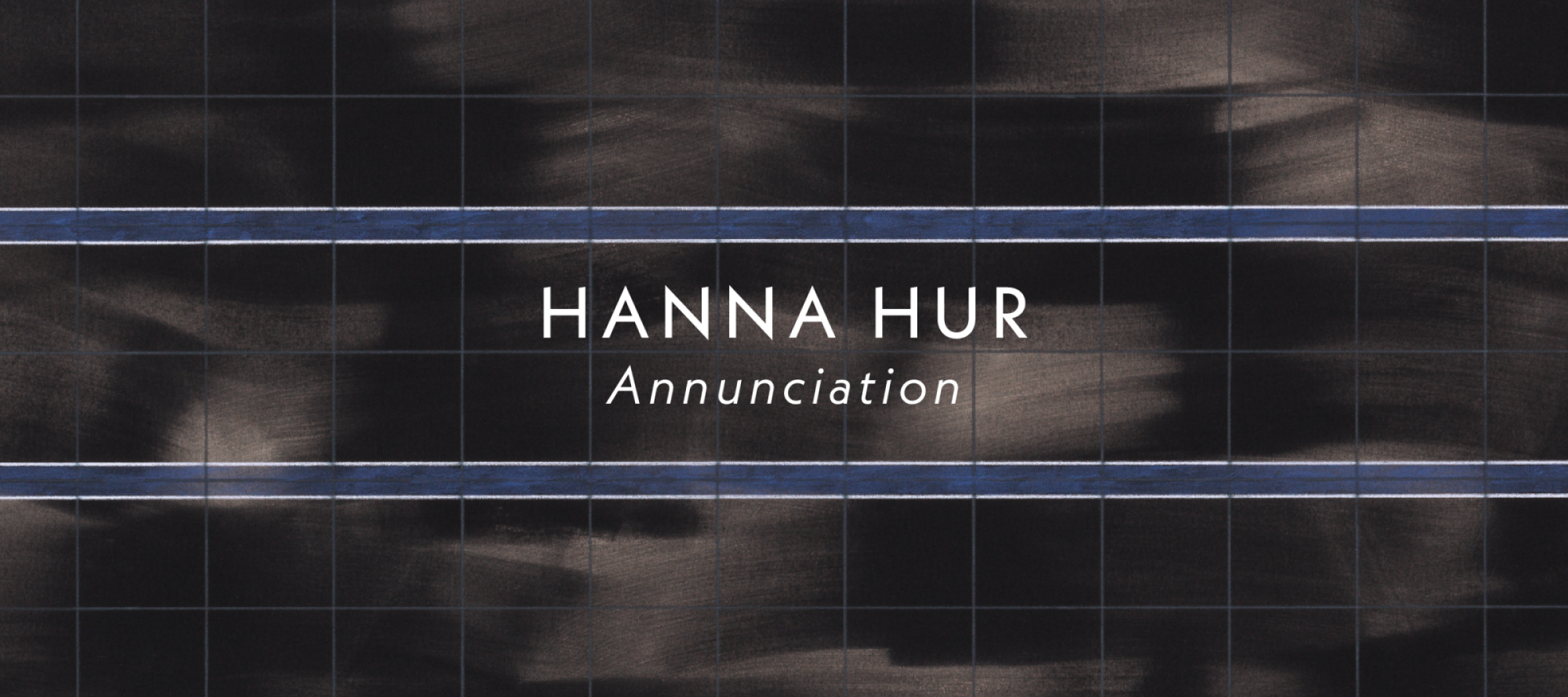
Each new work in Annunciation contains a base layer of thinned black paint, applied in brushstrokes that seem to ebb like water or scattered clouds against a darkened sky. That rhythmic ground is then plotted with a rectilinear grid, coupling the biomorphic and geometric modes that abstraction tends to cleave apart. What looks immaculate from a distance begins to waver on close inspection—the drag of pencil against the tooth of raw canvas divulging the hand at work. The final layer belongs to the image, which the discipline of patterning brings to light. Hur’s Angel paintings exemplify the “rational mysticism” for which she is known, transected by horizontal bars that spread like wings from a central spine of halfmoon arcs. The works’ two- and four-panel formats stem from her deep interest in doubles—the burgeoning prospects of more-than-one. Another diptych, Suspension, veils the pictorial field in a wash of lapis blue: a pigment so valuable that Renaissance painters reserved it for the Virgin’s mantle.
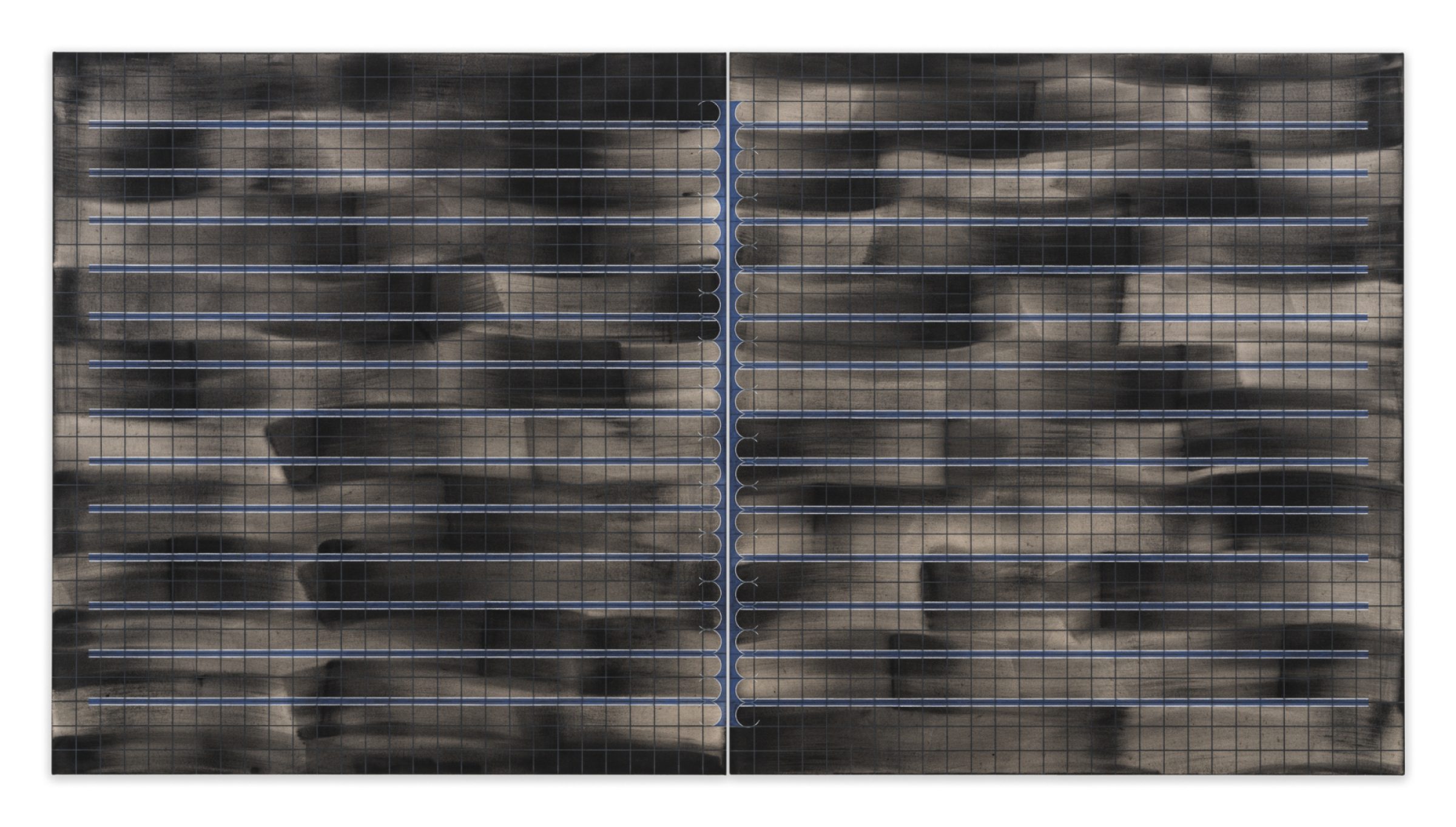
Hanna Hur
Angel xvi, 2026
Acrylic, colored pencil and pigment on canvas
Overall: 60 x 112 1/4 inches (152 x 285 cm)
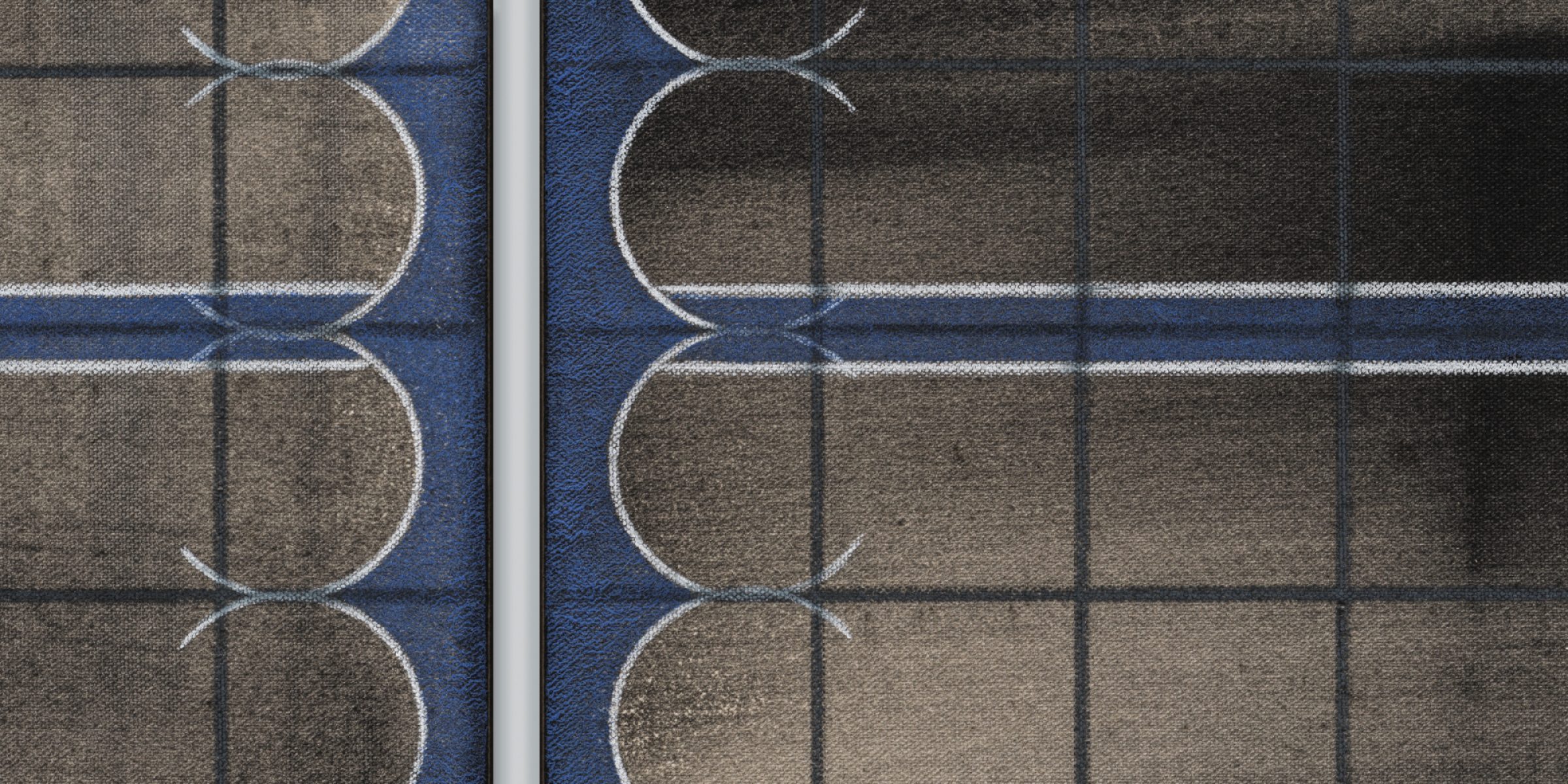
Hanna Hur, Angel xvi, 2026 (detail)
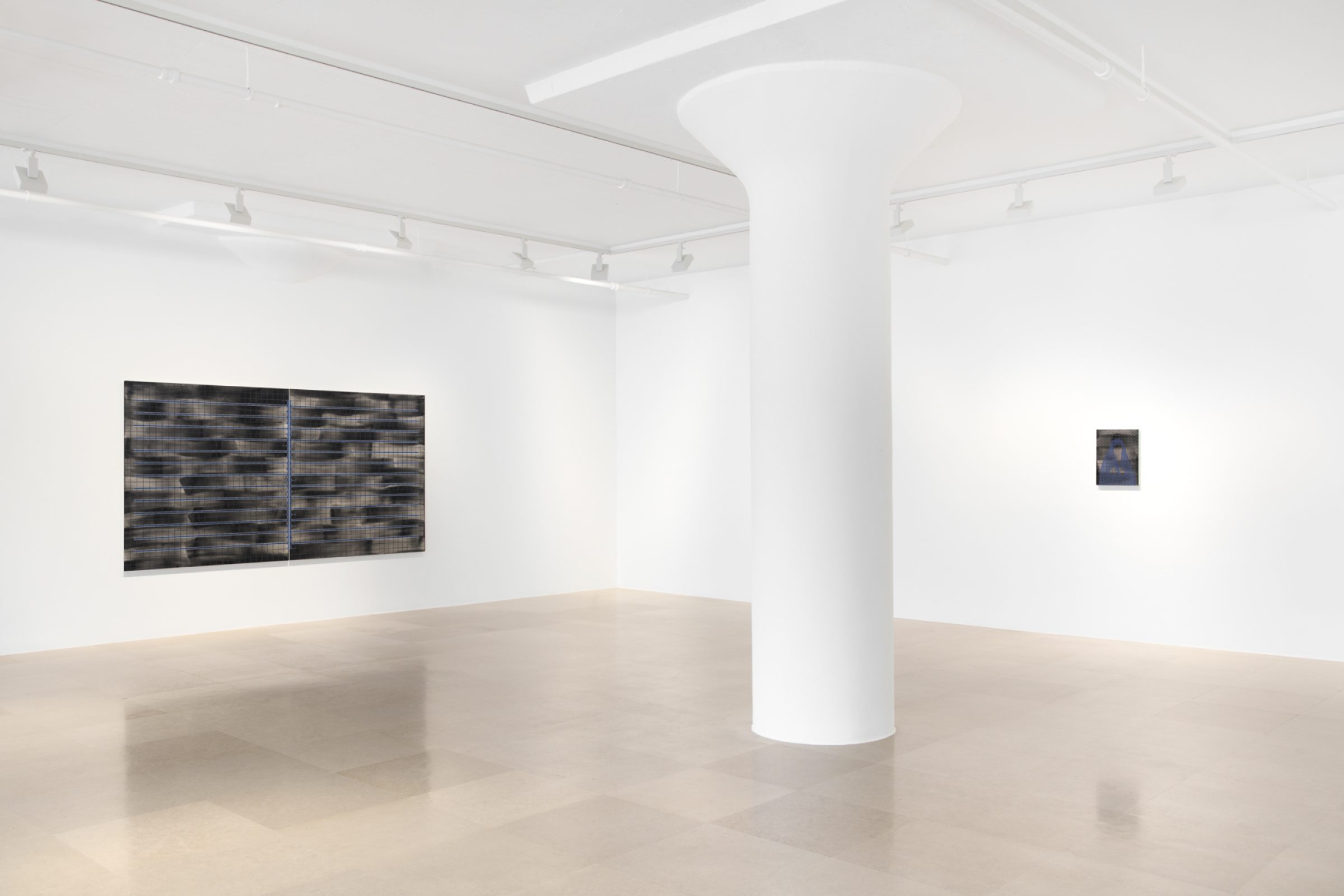
That veil recurs in a pair of works that silhouette an absent Madonna, lifted from Antonello da Messina’s fifteenth-century Virgin Annunciate. Annunciation scenes depict that rare moment when the divine is proximate to the human world, and Hur has long been fascinated with such sublime transmissions. Antonello flouted the genre’s conventions by removing the angel Gabriel, training the composition solely on Mary as she learns her fate. Hur installs her twinned paintings on axis to charge the space between them, grounding their visions in the spatial coordinates of a given architecture. This sensitivity to place is heightened in the exhibition’s only drawing, with a tremulous slit that radiates out from a sketch of the room in which it hangs. To stand before these works is thus to occupy the threshold state that attends their making, poised between material fact and revelation.
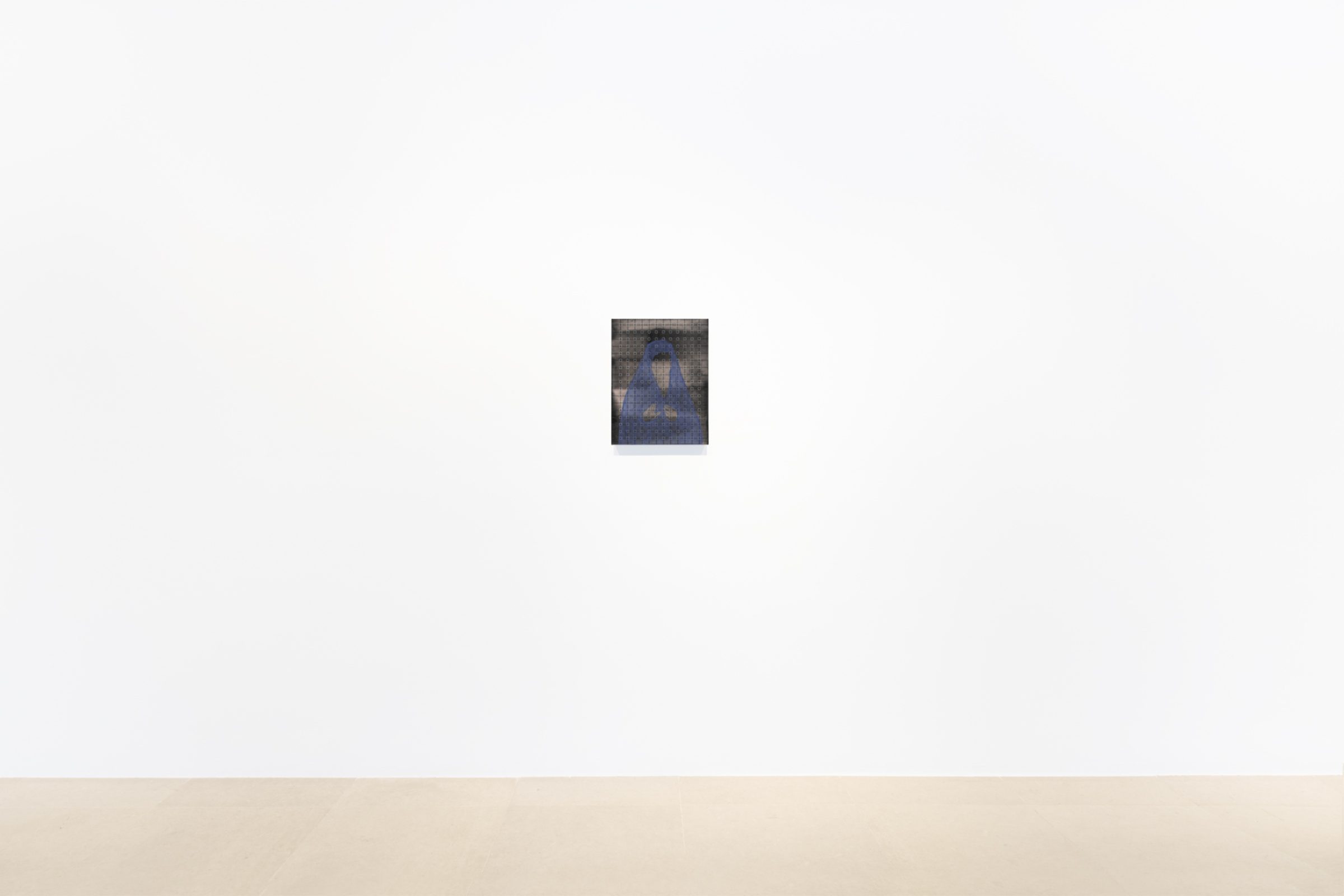
Hanna Hur, installation view, Annunciation, Greene Naftali, New York, 2026
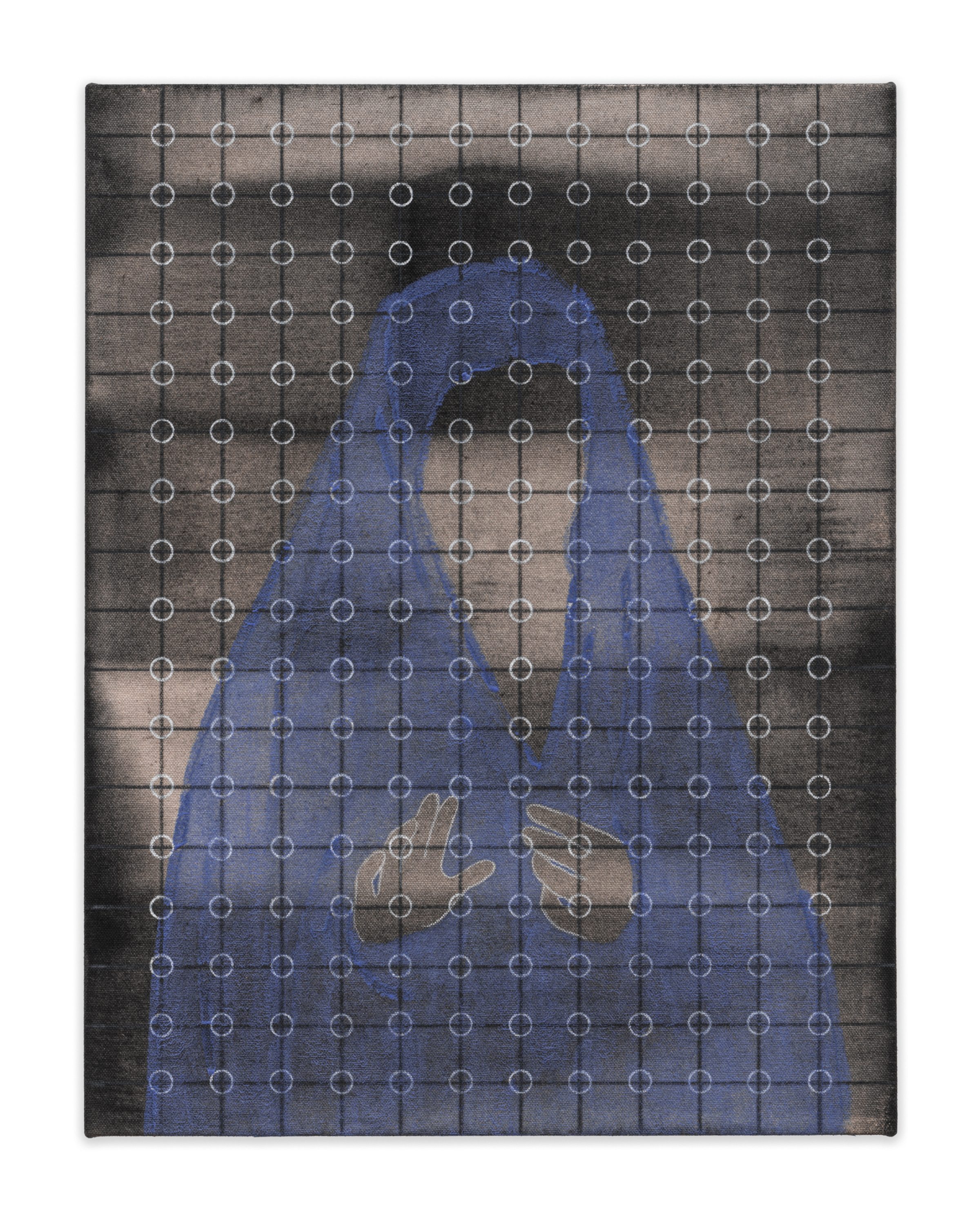
Hanna Hur
Auto Annunciate, 2026
Acrylic, colored pencil and pigment on canvas
17 7/8 x 13 3/4 inches (45 x 35 cm)
Hanna Hur, installation view, Annunciation, Greene Naftali, New York, 2026
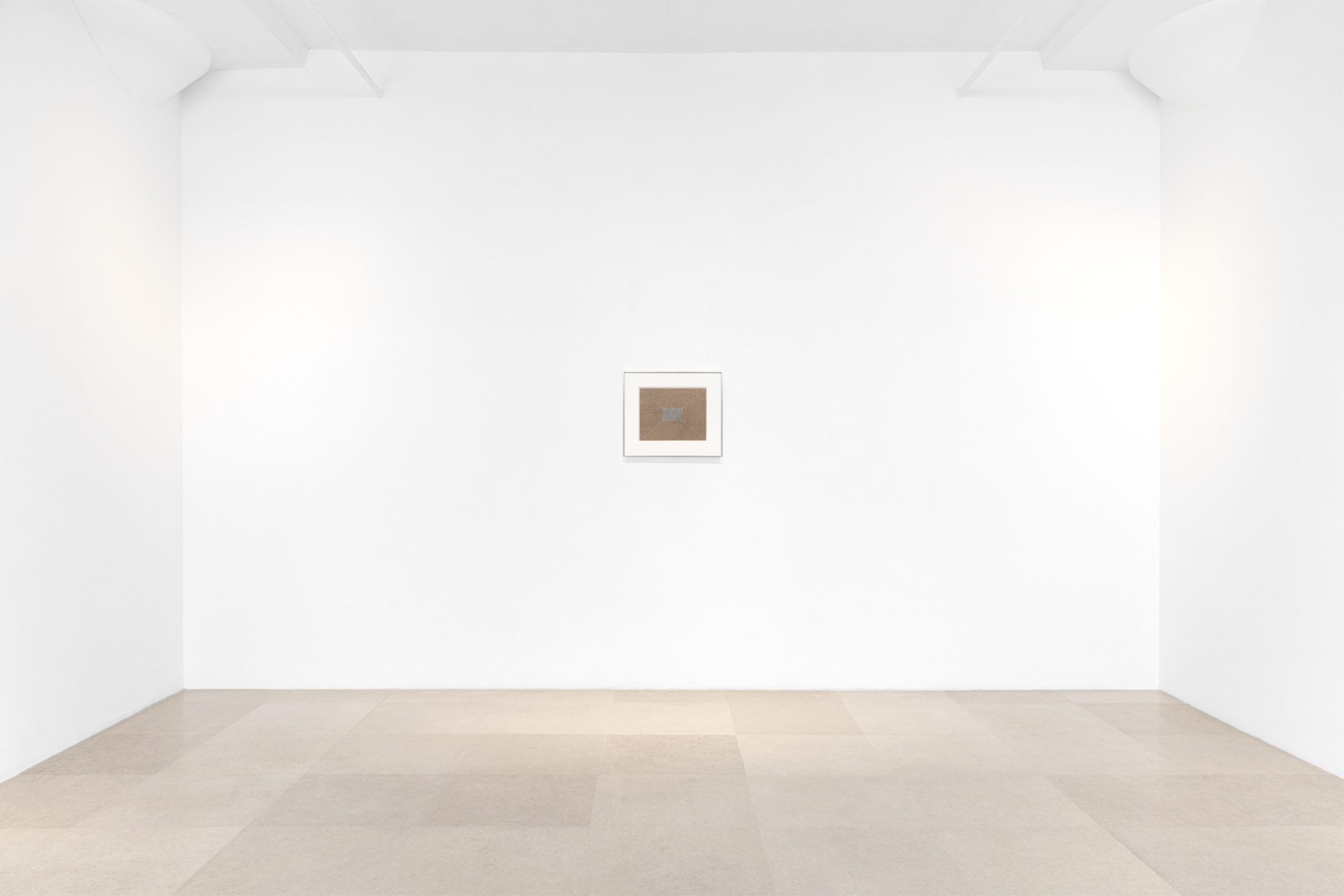
Hanna Hur, installation view, Annunciation, Greene Naftali, New York, 2026
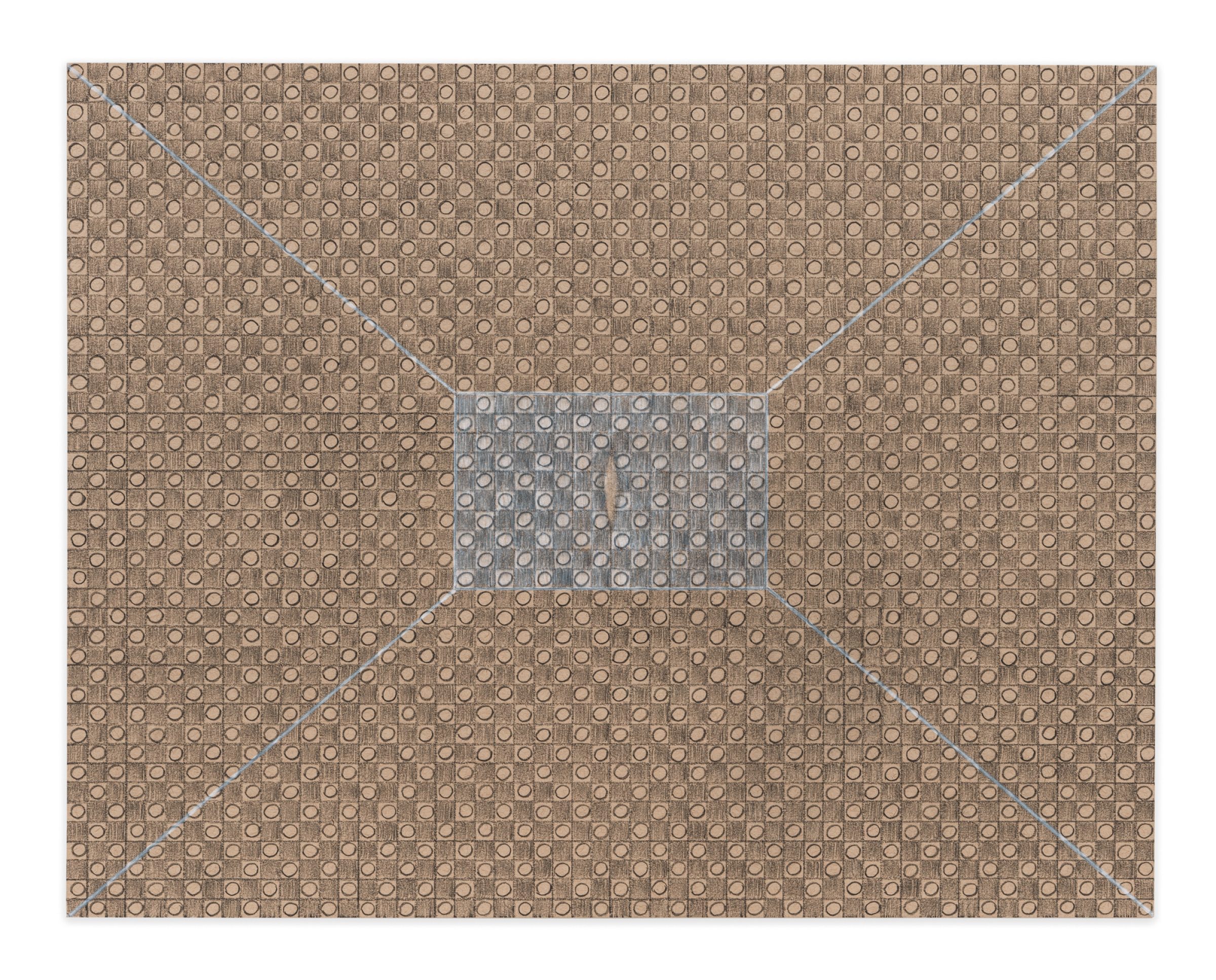
Hanna Hur
Annunciation, 2026
Colored pencil on paper
11 x 14 inches (28 x 36 cm)
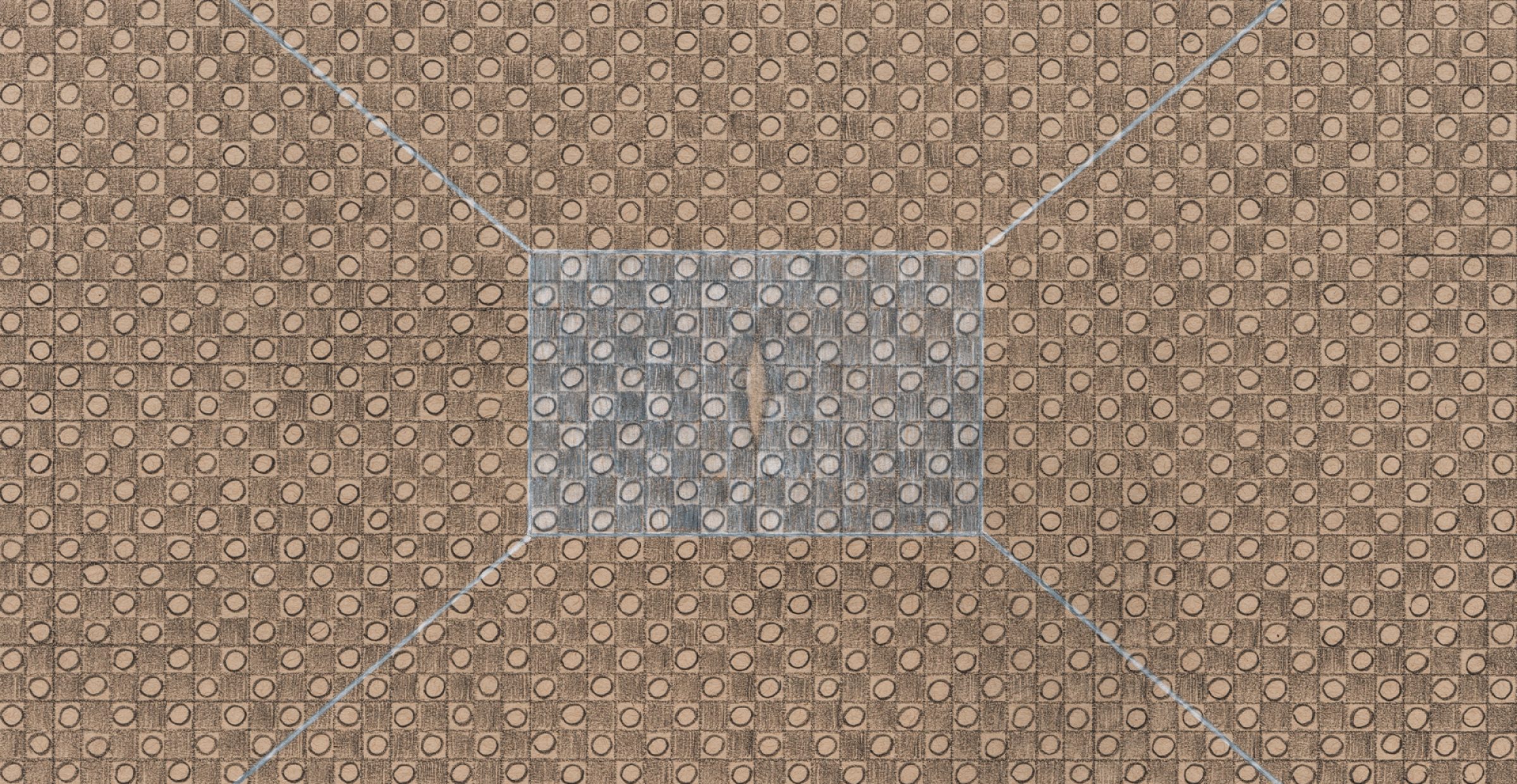
Hanna Hur, Annunciation, 2026 (detail)
Press Release
Download PDF
Exhibition Text
Download PDF
Press
Publications
Hanna Hur
Annunciation
Greene Naftali, New York.
